 Language
 Español
 Português
 Français
 Deutsche
 हिन्दी
 Nederland
 Русский
irori
Rating: 4.91 from 5 (based on 91 votes. 👍 89 – users like it, 👎 2 – disliked, 💬 0 – comments posted)
Released: September 2026
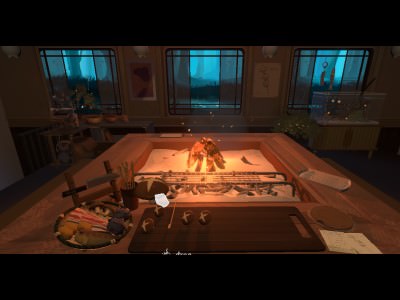
Irori is a short cozy cooking game set aboard a cross-lands train traveling through a gentle fantasy world. You work as the chef responsible for the train’s irori cabin, preparing warm skewers for tired passengers who stop by the hearth during their journeys. Rather than focusing on stressful restaurant management, the game is designed as a small, relaxing experience about food, travel, and sharing a quiet moment with strangers 🍢🚂.
Fantasy ingredients, soft 2.5D visuals, and warm character designs give Irori a peaceful atmosphere. During its brief 3–5 minute playtime, you can prepare different skewers, meet travelers, and spend time with a cute companion who has a story of his own.
Play Irori online on PlayMiniGames and take a short break aboard a fantasy train where a warm meal can comfort both the stomach and the heart.
What Is Irori?
Irori is a cozy cooking prototype developed by PomePomelo. The game places you aboard a train crossing a fantasy landscape, where your responsibility is to look after the irori cabin and prepare food for passengers.
An irori is traditionally associated with a sunken hearth used for heating and cooking, and the game builds its entire atmosphere around that sense of warmth and rest.
Passengers arrive tired from their own journeys, and your role is to give them a place where they can slow down for a moment and enjoy freshly prepared skewers.
Cook Skewers for Passing Travelers
Cooking is at the center of Irori.
You prepare different skewers using ingredients suited to the game’s fantasy setting. The supplied description does not list exact recipes or controls, so those mechanics are best discovered directly while playing.
The emphasis is less on speed and efficiency and more on the feeling of making food for people who need a moment of comfort.
Every passenger is another traveler passing through the world, making the irori cabin feel like a temporary meeting place where different journeys briefly intersect.
A Cozy Train Journey
The setting helps distinguish Irori from more traditional cooking games.
Instead of working in a permanent restaurant, you cook aboard a moving cross-lands train. The cabin travels through a larger fantasy world while passengers come and go.
This creates a strong sense of movement even though the game itself is intentionally calm. You are always traveling somewhere, but the hearth provides a small place of stability and warmth inside the train.
The contrast between a long journey and a quiet cooking cabin is one of the game’s most appealing ideas.
Fantasy Ingredients
Irori does not limit itself to ordinary food ingredients.
The developers specifically mention a variety of fantasy ingredients designed to fit the world.
This gives the cooking experience room for creativity and makes the food feel connected to the setting rather than copied directly from a real-world kitchen.
Part of the fun comes from seeing what kinds of ingredients exist in this world and how they can be combined into skewers for your passengers.
Meet a Cute Companion
During the short prototype, you are also accompanied by a cute character who shares his story with you.
This companion adds a more personal narrative element to the cooking experience.
Rather than treating Irori purely as a food-preparation game, the developers use conversation and character interaction to reinforce the feeling of taking a break with someone during a long journey.
The supplied description does not reveal the companion’s full story, so discovering it is part of the experience.
Warm 2.5D Visual Style
Irori uses cozy 2.5D aesthetics with soft character designs.
This visual direction supports the game’s relaxed tone. The hearth, food, travelers, and train interior are presented in a way that emphasizes comfort rather than realism or intensity.
The soft presentation also matches the developers’ stated goal of creating an experience where players can take a breather and rest for a few minutes.
Only 3–5 Minutes Long
Irori is intentionally very short.
The supplied description estimates a playtime of approximately 3–5 minutes.
This makes it suitable for players looking for a tiny cozy game rather than a long management simulation.
The prototype can be completed during a short break, and its compact length fits the developers’ intention of offering a peaceful moment instead of a demanding challenge.
A Prototype with Future Potential
The developers describe Irori as their first prototype and state that they have many ideas for future development.
This means the current version should be viewed as an early concept showing the atmosphere, cooking idea, characters, and world rather than a large finished game.
The team has also invited players to share feedback for possible future content.
Because the project is described as a prototype, specific features and development plans may change over time.
How to Play Irori
The supplied description does not provide a confirmed control scheme or detailed step-by-step cooking instructions.
Players should therefore follow the prompts and interface shown inside the game.
The general experience revolves around:
- Working as the chef of the irori cabin
- Preparing different skewers
- Using fantasy ingredients
- Serving travelers aboard the train
- Spending time with your companion
- Enjoying the short story and atmosphere
Tips for Playing Irori
- Take your time instead of rushing through the short prototype.
- Pay attention to the ingredients and food presentation.
- Read the companion’s dialogue carefully.
- Enjoy the atmosphere rather than treating the game as a score challenge.
- Follow the in-game prompts for exact cooking interactions.
- Replay the prototype if you want to revisit the cozy train setting.
Developed by PomePomelo
Irori was developed by PomePomelo.
The supplied credits list three members of the team:
- Daum — Designer and programmer
- Jewell — Designer and artist
- Zhiming — Designer and programmer
The team describes its goal as creating an experience where players can stop for a moment, breathe, and rest.
Why Players May Enjoy Irori
Irori may appeal to players who enjoy cozy games, cooking games, short indie experiences, fantasy food games, train games, relaxing visual experiences, and narrative games centered on small personal moments.
The combination of fantasy ingredients, warm cooking, train travel, and soft 2.5D visuals creates a very specific mood that separates Irori from competitive restaurant games or complex cooking simulators.
Players searching for Irori game, Irori cooking game, cozy train game, fantasy cooking game, PomePomelo Irori, short cozy browser game, or relaxing cooking game may find this title particularly relevant.
Irori Features
- Cozy cooking gameplay
- Cross-lands fantasy train setting
- Irori hearth cabin
- Skewer preparation
- Fantasy ingredients
- Traveling passengers
- Cute companion character
- Short narrative elements
- Warm 2.5D aesthetics
- Soft character designs
- Approximately 3–5 minutes of gameplay
- Relaxing prototype experience
- Developed by PomePomelo
FAQ About Irori
What type of game is Irori?
Irori is a short cozy cooking game where you prepare skewers for travelers aboard a fantasy cross-lands train.
What do you do in Irori?
You work as the chef of the irori cabin, prepare skewers from fantasy ingredients, and meet travelers passing through the train.
How long is Irori?
The supplied description estimates a playtime of approximately 3–5 minutes.
Does Irori have a story?
Yes. The game includes a cute companion who shares his story with the player, alongside the broader theme of meeting travelers on their journeys.
What kind of visual style does Irori use?
Irori uses warm 2.5D aesthetics with soft character designs.
Is Irori a full game?
The developers describe the current version as their first prototype and mention having ideas for future development.
Who developed Irori?
Irori was developed by PomePomelo, with Daum, Jewell, and Zhiming credited as members of the team.
What are the controls for Irori?
The supplied description does not list exact controls, so players should follow the prompts provided inside the game.