 Language
 Español
 Português
 Français
 Deutsche
 हिन्दी
 Nederland
 Русский
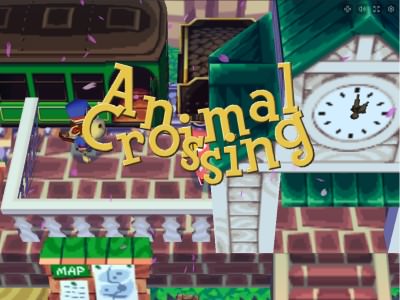
Animal Crossing
Rating: 4.4 from 5 (based on 20 votes. 👍 17 – users like it, 👎 3 – disliked, 💬 0 – comments posted)
Released: October 2026
Animal Crossing is Nintendo's relaxing social simulation series about moving into a community populated by anthropomorphic animals and building a life at your own pace. Instead of giving players a fixed sequence of missions, Animal Crossing focuses on everyday activities such as fishing, catching insects, collecting fossils, decorating a home, talking to villagers, gathering items, and watching the world change with the time of day and seasons. 🏡🌳
The series is known for its open-ended structure, humorous conversations, memorable characters, hourly music, customization, and use of a real-time clock. Play Animal Crossing in your browser on PlayMiniGames and experience the distinctive life-simulation style that made the series one of Nintendo's best-known franchises.
What Is Animal Crossing?
Animal Crossing is a social simulation game series developed and published by Nintendo and created by Katsuya Eguchi and Hisashi Nogami.
The player usually takes the role of a human who moves into a village or similar community inhabited by talking animals.
There is no traditional final objective forcing you toward a specific ending. Instead, you decide how to spend each day.
You might go fishing, search for insects, talk to neighbors, decorate your house, collect fruit, look for fossils, earn Bells, or simply walk around the village and see what has changed.
Open-Ended Life Simulation
Animal Crossing is built around freedom rather than constant pressure.
Players are encouraged to create their own routine and focus on whichever activities they find interesting.
There are goals such as expanding a house, completing collections, earning money, or improving the town, but the series generally allows you to approach these objectives at your own pace.
This makes Animal Crossing very different from action games where progression depends on defeating enemies or completing stages quickly.
Live Among Animal Villagers
The villages are populated by anthropomorphic animals with their own personalities, dialogue, homes, and routines.
Talking to residents is a major part of the experience.
Villagers may chat with you, exchange items, send letters, ask for favors, or participate in local activities.
Residents may also move in or leave depending on the game and the way the community develops.
Real-Time Gameplay
One of Animal Crossing's defining ideas is its use of real-world time.
The series uses the system clock and calendar so that the in-game world changes according to the actual time of day and season.
Morning, afternoon, evening, and night can feel different, and certain events may only happen at specific times.
Trees and other parts of the environment may also require real time to grow or change.
Seasonal Changes
Because the world follows a calendar, Animal Crossing is designed to change throughout the year.
Different seasons can affect the appearance of the environment, available activities, events, and the kinds of creatures that can be found.
This encourages players to return regularly rather than attempting to complete everything in a single session.
Fishing
Fishing is one of the most recognizable Animal Crossing activities.
Players can use a fishing rod near rivers, ponds, or the sea and try to catch different species.
Fish can typically be sold for Bells or, depending on the installment, donated to the museum.
Collecting different fish can become a long-term goal because not every species is necessarily available at the same time or season.
Catch Insects
Bug catching is another major collecting activity.
Players can explore the environment with a net and search for insects appearing on trees, flowers, the ground, or in the air.
Like fish, insects can often be sold or added to museum collections.
The real-time calendar makes collecting more interesting because different insects may appear under different conditions.
Find Fossils
Fossil hunting is another classic part of Animal Crossing.
Players can search the village for buried objects and uncover fossils.
Special items such as fossils can be donated to the museum, helping build a larger collection over time.
Players can also choose to sell collectible objects if they prefer earning Bells.
Collect Items Around the Village
Exploration regularly rewards the player with useful or valuable objects.
The supplied description mentions fruit, seashells, discarded items, fossils, paintings, furniture, clothing, and other collectibles.
Many items can be sold for Bells, which are the primary in-game currency used throughout the series.
Earn Bells
Bells are used to buy furniture, clothing, home improvements, and other items.
Players can earn Bells by collecting and selling things found around the village.
This creates a simple but satisfying cycle: explore, collect, sell, and use the money to personalize or expand your life in the game.
Decorate Your House
Home customization is one of Animal Crossing's most important features.
Players can buy and collect furniture, place it inside the house, and change wallpaper and flooring.
The house can also be expanded over time in many installments.
This gives players a long-term creative goal because a small starting home can gradually develop into a much more personalized space.
Customize Your Character
Animal Crossing also provides character customization.
Depending on the installment, players can modify clothing, accessories, hairstyles, and other aspects of appearance.
Custom designs and clothing allow players to give their character a distinctive look.
Because the supplied description covers the entire Animal Crossing series, the exact customization options depend on the specific game version being played.
Customize the Village
Customization extends beyond the player character and house.
The supplied description mentions player-defined elements such as the village name, anthem, resident catchphrases, and other town details.
Later installments expanded these systems further, although exact options vary between games.
The Museum
The museum is an important destination throughout the series.
Blathers, an owl, serves as the museum curator in the games described by the source.
Players can donate special discoveries such as fossils and paintings, as well as other collectible categories depending on the installment.
Building a complete museum collection can become one of the longest-running goals in Animal Crossing.
Tom Nook
Tom Nook is one of the most recognizable characters in Animal Crossing.
He is described as a tanuki, or as a raccoon in some localized versions, and has served as both a shop owner and real-estate figure.
Tom Nook can provide the player with a house and upgrades through a loan system.
The supplied description specifically notes that these loans do not charge interest.
K.K. Slider
K.K. Slider is a traveling canine musician and another recurring character.
He performs music on certain nights and can give the player a copy of a song after performing it.
Music is an especially important part of Animal Crossing because the series is also known for changing background music throughout the day.
Isabelle
Isabelle is another major character who became especially prominent in later installments.
She first appeared in Animal Crossing: New Leaf as an assistant to the player and later appears in New Horizons as a community manager and secretary to Tom Nook.
Her responsibilities can involve community information and customization options such as the town flag and tune.
Other Familiar Characters
Animal Crossing includes many recurring characters beyond the villagers themselves.
Timmy and Tommy are associated with Nook's Cranny, while Mabel and Sable run the Able Sisters clothing business.
Blathers manages the museum, while Orville and Wilbur appear in New Horizons as the operators of Dodo Airlines.
Mr. Resetti is another famous character, traditionally known for appearing when players reset older games without saving.
Hourly Music
The Animal Crossing series is particularly well known for its music.
Different tracks can play at different hours, helping morning, afternoon, evening, and nighttime sessions feel distinct.
This reinforces the idea that the village is a living place that continues changing even when the player is not actively pursuing a mission.
Crafting and Planting
The supplied series overview also mentions activities such as crafting items and planting plants.
These systems are associated especially with later entries in the franchise and should not be assumed to exist in exactly the same form in every Animal Crossing title.
The browser version available on PlayMiniGames may therefore differ depending on which specific installment or adaptation is being played.
Playing with Other People
Communication between players has appeared in different forms throughout the Animal Crossing series.
Older games used systems such as shared villages, memory cards, letters, and local interaction, while later games introduced internet-based travel and multiplayer features.
The exact multiplayer functionality varies significantly between installments.
Players should therefore use the communication and multiplayer options available in the specific browser version rather than assuming that every feature from later Animal Crossing titles is included.
How to Play Animal Crossing
The supplied description covers multiple Animal Crossing games and does not provide one universal browser control layout.
A typical Animal Crossing session can involve:
- Exploring the village
- Talking to animal residents
- Fishing
- Catching insects
- Searching for fossils
- Collecting fruit and seashells
- Selling items for Bells
- Buying furniture and clothing
- Decorating your house
- Building collections
- Participating in seasonal activities
- Returning at different times of day to see what changes
For exact controls, follow the instructions provided by the current browser version on PlayMiniGames.
Tips for Animal Crossing
- Talk to villagers regularly because their dialogue and activities can change.
- Check different parts of the village for collectible items.
- Fish at different times to discover different species.
- Look for insects during different seasons and times of day.
- Search for buried fossils regularly.
- Sell duplicate items when you need more Bells.
- Save rare collectibles if you want to build a museum collection.
- Experiment with furniture instead of treating your house as permanent.
- Return on different days because the game world follows real time.
- Do not rush; Animal Crossing is designed around gradual progress.
Main Animal Crossing Games
The supplied description notes that the series has appeared across several generations of Nintendo hardware, including Nintendo 64, GameCube, Nintendo DS, Wii, Nintendo 3DS, and Nintendo Switch.
Different installments expand or change the formula, so mechanics from one game may not exist in another.
Spin-offs mentioned in the source include Animal Crossing: Happy Home Designer, Animal Crossing: Amiibo Festival, and Animal Crossing: Pocket Camp.
Animal Crossing: New Horizons also received the Happy Home Paradise downloadable expansion.
Why Players May Enjoy Animal Crossing
Animal Crossing may appeal to players who enjoy relaxing games, life simulators, collecting, fishing games, home decoration, customization, friendly NPC interaction, casual exploration, and games that can be played a little at a time.
Its biggest strength is that it does not constantly tell the player what they must do next. You can spend a session earning Bells, redesigning a room, catching insects, talking to villagers, or simply exploring.
Players searching for Animal Crossing online, Animal Crossing browser game, Animal Crossing play online, Nintendo life simulation game, village simulator, animal village game, relaxing social simulation, or games like Animal Crossing may find this title especially relevant.
Animal Crossing Features
- Open-ended social simulation gameplay
- Village populated by anthropomorphic animals
- Fishing
- Insect catching
- Fossil hunting
- Item collecting
- Fruit and seashell gathering
- Bells as in-game currency
- Furniture collection
- Home decoration
- House expansion in supported installments
- Character customization
- Villager conversations
- Letters and social interactions
- Museum collections
- Real-time clock and calendar
- Seasonal changes
- Hourly music
- Recurring characters such as Tom Nook and K.K. Slider
- Long-term progression without a fixed ending
- Browser play on PlayMiniGames
FAQ About Animal Crossing
What is Animal Crossing?
Animal Crossing is Nintendo's social simulation series in which a human player lives in a community populated by anthropomorphic animals and spends time fishing, collecting, decorating, socializing, and participating in everyday village life.
Does Animal Crossing have a main objective?
The series is primarily open-ended. Players are encouraged to choose their own activities rather than follow one fixed objective or final mission.
Does Animal Crossing use real time?
Yes. The series is known for using the system clock and calendar so that time of day, seasons, and certain events reflect real-world time.
Can you fish in Animal Crossing?
Yes. Fishing is one of the main recurring activities throughout the series.
Can you catch bugs and find fossils?
Yes. Insect catching and fossil hunting are major collecting activities in Animal Crossing.
What are Bells?
Bells are the main in-game currency used to purchase furniture, clothing, home improvements, and other items.
Who is Tom Nook?
Tom Nook is a recurring Animal Crossing character associated with shops, property, housing, and home upgrades.
Who is K.K. Slider?
K.K. Slider is a recurring canine musician who performs songs and is one of the series' most recognizable characters.
Can you customize your house?
Yes. Players can collect furniture, change wallpaper and flooring, and personalize their home. Exact customization systems vary by installment.
Can you play Animal Crossing in a browser?
Yes. The version described here can be played in a browser on PlayMiniGames. Features may differ depending on the specific Animal Crossing version available.