 Language
 Español
 Português
 Français
 Deutsche
 हिन्दी
 Nederland
 Русский
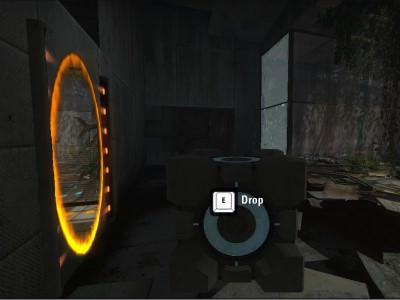
Portal 2
Rating: 4.33 from 5 (based on 12 votes. 👍 10 – users like it, 👎 2 – disliked, 💬 0 – comments posted)
Released: August 2026
Portal 2 is a first-person puzzle game developed and published by Valve Corporation. Released on April 19, 2011, for PC, PlayStation 3, and Xbox 360, it continues the story and gameplay ideas of the original Portal while introducing larger environments, new puzzle mechanics, more characters, and a separate cooperative campaign.
Players solve test chambers by creating linked portals and using momentum, physics, switches, gels, lasers, and moving platforms. The game combines logical puzzles with dark humor, science-fiction storytelling, and the unsettling atmosphere of the Aperture Science laboratories 🌀.
Portal 2 is designed for players who enjoy puzzle adventures, physics-based challenges, cooperative problem-solving, and story-driven first-person games.
What Is Portal 2?
Portal 2 is the sequel to Portal and expands almost every part of the original concept. The player once again enters the Aperture Science testing facility, where seemingly simple experiments gradually become more complex and dangerous.
The central tool is the portal device. It allows the player to place two connected portals on suitable surfaces. Entering one portal causes the character or an object to emerge from the other.
Progress depends on understanding how portals interact with momentum, gravity, moving objects, energy beams, gels, and other test-chamber elements.
Portal 2 Story
The single-player campaign follows Chell, the protagonist from the first game. She returns to the damaged Aperture Science facility and becomes involved in another series of tests.
GLaDOS, the artificial intelligence responsible for the laboratory, returns as a central character. Her relationship with Chell remains hostile, sarcastic, and closely connected to the events of the first game.
Wheatley, an Intelligence Dampening Sphere, also plays a major role in the story. His personality and decisions influence the direction of the campaign and create new problems inside the facility.
As Chell travels deeper into Aperture Science, the game reveals more about the company’s past, its founder Cave Johnson, and Caroline, whose history is connected to GLaDOS.
The story moves beyond the clean test chambers and explores older, abandoned sections of the facility. These areas help explain how Aperture Science developed and why its experiments became so dangerous.
Main Characters
Portal 2 includes several memorable characters who provide dialogue, story development, and humor throughout the campaign.
- Chell — The silent protagonist of the single-player campaign.
- GLaDOS — The Aperture Science artificial intelligence and primary antagonist during the first part of the story.
- Wheatley — An Intelligence Dampening Sphere whose actions strongly affect the facility.
- Cave Johnson — The founder of Aperture Science, heard through recorded messages.
- Caroline — A figure connected to the history of Aperture Science and GLaDOS.
- ATLAS and P-body — The two robotic protagonists of the cooperative campaign.
- Doug Rattmann — A hidden character whose presence is suggested through drawings and messages.
- Space Core, Adventure Core, and Factual Core — Personality constructs encountered later in the game.
How Portal 2 Gameplay Works
Portal 2 is played from a first-person perspective. The player explores test chambers, studies the available objects, and determines how to reach the exit.
The portal device can create two connected openings. Portals can be used to cross gaps, redirect movement, transport objects, and build momentum.
Many puzzles require the player to think about position and speed. Falling into one portal can launch Chell from another, allowing her to reach distant platforms or cross large spaces.
New elements introduced in Portal 2 make the puzzles more varied than those in the original game.
Portal 2 Puzzle Mechanics
Mobility Gels
Mobility Gels change how surfaces behave. Different gels can increase movement speed, make surfaces bouncy, or allow portals to be placed in areas that normally would not support them.
Players often need to spread gel across floors or walls before using it to reach another part of the chamber.
Aerial Faith Plates
Aerial Faith Plates launch players and objects through the air. They can be used to cross large gaps, reach higher platforms, or move test objects into specific positions.
Thermal Discouragement Beams
Thermal Discouragement Beams are laser-based puzzle elements. Players may need to redirect the beam using portals or special cubes so that it reaches a receiver.
Buttons and Cubes
Many test chambers use weighted buttons and movable cubes. Cubes can activate switches, block lasers, or be transported through portals.
Momentum and Gravity
Portal 2 frequently uses the principle that speed is preserved when passing through portals. A long fall into one portal can create enough momentum to launch the player from another.
Enemies and Hazards
Although Portal 2 focuses on puzzles, it also includes threats that make certain areas more dangerous.
Aperture Science Sentry Turrets can detect and shoot at the player. They are normally defeated by knocking them over, dropping objects on them, or approaching from a protected angle.
Some test chambers also contain deadly drops, toxic liquid, moving machinery, and other environmental hazards.
Combat plays a somewhat larger role than in the original Portal, but the player still relies on portals, movement, and puzzle-solving instead of traditional weapons.
Portal 2 Co-op Campaign
Portal 2 introduced a separate cooperative campaign for two players. The co-op story takes place after the single-player campaign and follows two robots: ATLAS and P-body.
Each player has a portal device, allowing the team to create four portals in total. This makes the cooperative puzzles more complex because both players must coordinate their portal placement and timing.
The co-op campaign is not simply a copy of the single-player levels. It contains its own test chambers, story elements, environments, and credits.
Players need to communicate, share ideas, and perform actions together. One robot may hold a button while the other moves through a portal, or both players may need to launch themselves at the same moment.
The game also includes gestures that allow ATLAS and P-body to communicate and interact in humorous ways.
Why Portal 2 Co-op Is Different
Single-player puzzles are designed around one portal device, while co-op puzzles assume that two people can act independently.
This creates challenges where one player controls part of the environment and the other completes a separate action.
Some puzzles require trust. A player may need to step into a dangerous area while relying on their partner to place the correct portal or activate a switch.
The robotic characters also provide a story explanation for respawning. If one robot is destroyed, it can be rebuilt without ending the campaign.
Portal 2 Development
Portal 2 was announced in March 2010 after clues appeared through an update to the original Portal.
The project went through several planned release dates before launching on April 19, 2011.
During development, Valve explored ideas connected to an earlier concept known as F-STOP. That project was originally imagined as a prequel set during the era of Cave Johnson and did not focus on portal mechanics.
Although the final Portal 2 returned to portal-based puzzles, parts of the earlier concept influenced the old Aperture Science environments and Enrichment Shafts.
Valve also introduced the cooperative campaign after experimenting with different forms of multiplayer. A competitive deathmatch version was considered less suitable than cooperative puzzle-solving.
Portal 2 on PlayStation 3
The PlayStation 3 version included Steam-related features such as cross-platform matchmaking, friends, chat, achievements, and cloud saves.
This integration allowed players to connect features across platforms and continue saved progress through Steam Cloud.
According to Valve’s promotional material, these features were intended to make the PlayStation 3 release the strongest console version of Portal 2.
Portal 2 Tips for Beginners
- Study the entire room before placing portals.
- Look for white or suitable portal surfaces.
- Follow cables from switches to doors and other devices.
- Use momentum when a platform appears too high or far away.
- Move cubes and other objects through portals when necessary.
- Watch how gels change movement and surface behavior.
- Use cover and portals to avoid turret fire.
- In co-op, explain your plan before activating moving parts.
- Remember that both players can create two portals each.
- Do not assume that every puzzle has only one obvious step.
Why Players Still Enjoy Portal 2
Portal 2 combines logical puzzles with memorable characters and a strong sense of progression. The game begins with relatively simple portal challenges and gradually introduces more complicated mechanics.
The humor of GLaDOS, Wheatley, and Cave Johnson helps distinguish the game from more serious science-fiction adventures.
The single-player campaign offers a complete story, while the co-op mode provides a second campaign built around teamwork.
Players searching for Portal 2, Portal 2 puzzle game, Valve puzzle games, Aperture Science games, GLaDOS games, co-op puzzle games, or physics-based first-person games may find it especially appealing.
Portal 2 Features
- First-person physics-based puzzle gameplay
- Portal device with two connected portals
- Single-player story featuring Chell
- GLaDOS and Wheatley as major characters
- Separate two-player cooperative campaign
- ATLAS and P-body as co-op protagonists
- Mobility Gels
- Aerial Faith Plates
- Thermal Discouragement Beams
- Sentry Turrets and environmental hazards
- Abandoned Aperture Science locations
- Story elements involving Cave Johnson and Caroline
- Physics, momentum, and gravity puzzles
- Released for PC, PlayStation 3, and Xbox 360
FAQ About Portal 2
What type of game is Portal 2?
Portal 2 is a first-person puzzle game based on portals, physics, environmental challenges, and story-driven exploration.
Who developed Portal 2?
Portal 2 was developed and published by Valve Corporation.
When was Portal 2 released?
Portal 2 was released on April 19, 2011.
Who is the main character?
Chell is the protagonist of the single-player campaign.
Does Portal 2 have co-op?
Yes. Portal 2 includes a separate cooperative campaign for two players featuring ATLAS and P-body.
What new mechanics were added?
New mechanics include Mobility Gels, Aerial Faith Plates, Thermal Discouragement Beams, and more complex cooperative portal puzzles.
Is GLaDOS in Portal 2?
Yes. GLaDOS returns as one of the main characters and antagonists.
What platforms was Portal 2 released on?
Portal 2 was released for PC, PlayStation 3, and Xbox 360.
Is Portal 2 connected to Half-Life?
Portal 2 takes place in the broader universe associated with Valve’s Half-Life series, with Aperture Science serving as an important shared element.